.png)
The 4N Framework and Christmas
- Rande Vick

- Dec 22, 2025
- 4 min read
Holiday Memories and Neurobrand Stratetgy

The smell hit me before I even opened the door.
Baked Ham. Steaming Tamales. That particular warmth that only comes from too many people in too small a space, all talking at once. I was seven years old, standing on my gran's porch on Christmas Eve, and my brain was recording everything.
I didn't know it then, but that moment (and thousands like it) would stay with me for decades. Not because someone told me to remember it. Not because I took a photo or wrote it down. But because Christmas, perhaps more than any other cultural ritual, operates on the exact principles that neuroscience has shown create indelible memory.
I call them the 4N's
Nuance, Novelty, Nostalgia, and Narrative. And if you want to understand why certain memories feel so achingly vivid while others blur or fade, Christmas is the masterclass.
What is Neurobranding? Click here!
Nuance: The Signature of Sensory Detail
Memory isn't stored in broad strokes. It lives in the specific.
Not just "Christmas cookies," but the way flour dusted my mom's forearms while she rolled dough. The exact pressure of the cookie cutter in my small hand. The metallic taste of the raw cookie dough I wasn't supposed to eat, but seriously did (how am I still alive?). That antique, hand-me-down timer's mechanical tick-tick-tick.
These nuances – these hyper-specific sensory details – are what neuroscientists call "retrieval cues." Each one is a thread that, when pulled, unravels an entire tapestry of memory. The more nuanced the experience, the more hooks your brain has to catch and hold it.
This is why Christmas hits different people in different ways. Your grandmother's specific recipe. That one ornament that stands out year after year. The particular shade of blue lights your neighbor always used. The way your father's voice cracked slightly when he read saying grace...
Specificity creates stickiness.
Novelty: When Familiar Becomes Fresh
Here's the paradox: Christmas is tradition, yet every Christmas is new.
You've opened presents before, but never these presents. You've sung carols before, but never with this exact group, in this exact moment, with this past years experiences under your belt. The tree is always a tree... except when it's the first tree in your new house, or the last tree with everyone together, or the tree where your toddler truly understood for the first time.
The brain is a prediction machine, constantly comparing what it expects against what it receives. When something violates our expectations, even slightly, our neural attention spikes. We lean in. We encode to memory.
This is why Christmas morning at six years old feels different than Christmas morning at sixteen, which feels different than Christmas morning as a new parent. The ritual is familiar, but the context shifts. Novelty nested in nostalgia. The brain can't help but pay attention.
Learn More About Memory Branding
Nostalgia: The Emotional Amplifier
Here's what neuroscience has taught us: emotion doesn't just color memory – it creates it.
When you experience something emotionally significant, your amygdala essentially tags that memory as "important – save this." The stronger the emotion, the more robust the encoding. This is why you remember your first kiss but not what you had for lunch last Tuesday.
Christmas is drenched in emotion. Joy, of course – but also longing, grief, hope, connection, sometimes disappointment. All of it matters. All of it sticks.
And then there's the recursive loop: memories creating emotions creating memories. You remember Christmas past while experiencing Christmas present, and the two compound. Your granny's cookies don't just taste like butter and sugar; they taste like being loved across time. The carol doesn't just sound sweet; it sounds like belonging.
This emotional layering is why Christmas memories often feel bigger than other memories. They're not single experiences – they're palimpsests, written and rewritten, each year adding depth.
Narrative: The Thread That Holds Everything
But here's the thing about all these individual moments, these sensory nuances and novel experiences and emotional amplifications: they need a story to hold them together.
Your brain doesn't store memories like files in a cabinet. It stores them like scenes in a story. And Christmas is perhaps our culture's most powerful shared narrative – a story we all know, that we all participate in, that binds us across geography and generation.
"The year we got snowed in." "The Christmas Dad dressed up as Santa." "Our first Christmas in the new house." "The last Christmas before everything changed."
These aren't just memories. They're chapters. And your brain, that magnificent storytelling machine, weaves them into the larger narrative of who you are and where you came from.
This is why families repeat the same stories year after year. We're not being redundant, we're reinforcing the neural pathways, strengthening the connections, ensuring the story survives. We're keeping each other alive in memory.
The Deeper Pattern
What Christmas teaches us – what the 4N's reveal – is that memory isn't about information retention. It's about meaning-making.
The moments that stay with us are the ones rich in sensory detail, touched by novelty, amplified by emotion, and woven into story. This is true for Christmas. It's true for brands. It's true for any experience we want people to carry forward.
The ornaments on my tree aren't just decorations. They're memory anchors. Each one tells a story. Each one carries nuance (the weight in my hand, the way light catches the glass), novelty (where and when I got it), nostalgia (who gave it to me, what year it represents), and narrative (the story it tells about my life, my family, my journey).
This is what it means to be unforgettable. Not flashy, just resonant.
Deep.
The kind of deep that lasts.
So this Christmas, pay attention. Notice the nuances. Welcome the novelty. Feel the emotions. Tell the stories.
Your brain is already working to save them. Give it something worth keeping. ____________
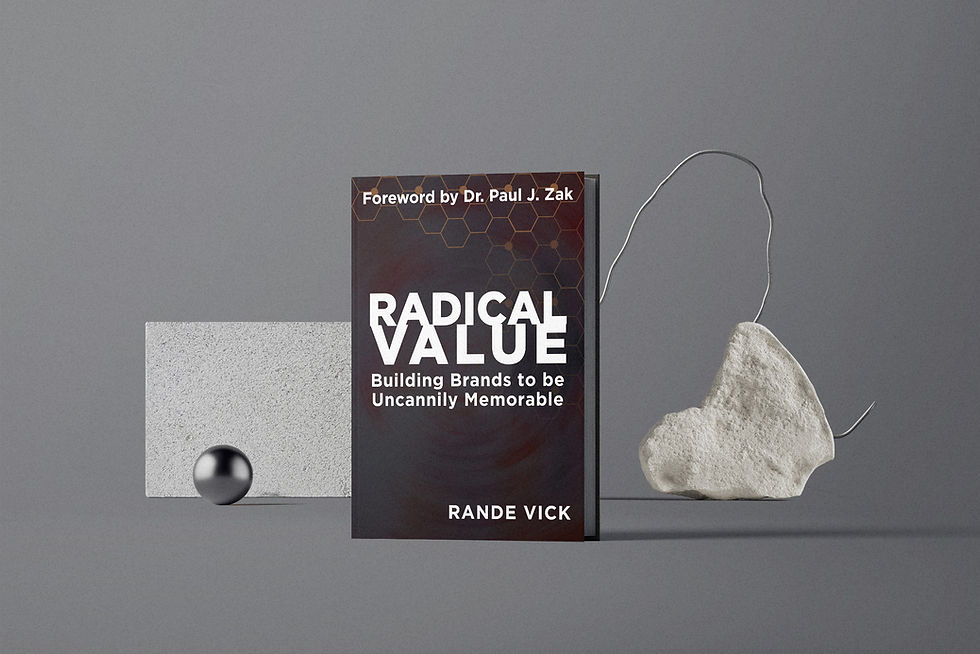
Rande Vick is the creator of The NeuroBrand Method™ and author of "Radical Value: Building Brands to be Uncannily Memorable." He studies how brains create meaning—and helps organizations do the same.



Comments